TonicNest may earn a commission if you buy through links on this page, at no extra cost to you. That does not change what we report.
Part of our LeanBiome overview. Last checked October 27, 2026.
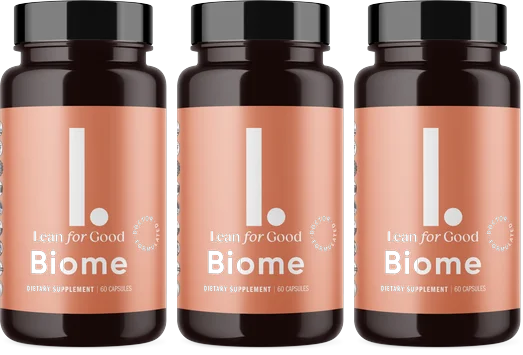
LeanBiome ingredients are nine probiotic species totaling 20 billion CFU, plus chicory inulin, decaffeinated green tea extract, Sphaeranthus indicus and mangosteen, in 2 delayed-release capsules a day[1]. Unlike many weight products sold through ClickBank, the bottle (labeled "Biome" by Lean for Good) prints a full Supplement Facts panel. What it leaves out is the strain code for each probiotic, and that gap decides how much the research can tell you. The views in this guide are our own.
LeanBiome ingredients at a glance
Seven items appear on the label, and all but one show a dose. The exception is a 10 mg blend that holds seven of the nine probiotic species. Grades below are for body weight or fat and apply to LeanBiome's unnamed strains and stated doses, not to the best strain ever tested.
| Ingredient (per 2 capsules) | Role the vendor claims | Amount disclosed? | Evidence grade |
|---|---|---|---|
| Lactobacillus gasseri | "Lean bacteria" for belly fat | Yes, 25 mg (10 billion CFU) | Weak |
| Lactobacillus rhamnosus | "Lean bacteria" for fat loss | Yes, 10 mg (5 billion CFU) | Weak |
| Blend of 7 species | "Lean bacteria" | Total only, 10 mg (5 billion CFU) | Weak |
| Inulin (chicory root) | Prebiotic fiber | Yes, 200 mg | Weak |
| Green tea phytosome (decaffeinated) | Greenselect fat loss, per sales page | Yes, 300 mg; EGCG not stated | Weak |
| Sphaeranthus indicus | Herbal weight support | Yes, 300 mg; extract ratio not stated | Limited for Meratrim at 800 mg; untested at this dose |
| Mangosteen (pericarp) | Paired with Sphaeranthus | Yes, 100 mg | Weak alone |
What is in each ingredient, and what does research say?
Each ingredient has some human research, but almost none of it used LeanBiome's form or dose. Probiotic effects belong to named strains, and LeanBiome names species only, so every probiotic below is graded Weak for this bottle.
Lactobacillus gasseri (10 billion CFU)
This is the largest dose on the label. Kadooka 2013 gave 210 Japanese adults fermented milk with strain SBT2055 for 12 weeks, and visceral fat area fell 8.5% and 8.2% in the two dose groups[2]. Kim 2018 tested strain BNR17 in capsules: visceral fat fell, but weight did not differ from placebo[3]. LeanBiome's CFU count sits inside the studied range of about 200 million to 20 billion a day. The strain and the delivery differ.
Lactobacillus rhamnosus (5 billion CFU)
The evidence for weight is thin even for named strains. Sanchez 2014 found no weight difference in the whole group with strain CGMCC1.3724, with more loss only in a subgroup of women during energy restriction[4]. Choi 2023 tested HA-114 in 152 adults on a diet and saw no added weight or fat loss[5]. The CGMCC1.3724 trial used about 320 million CFU a day, far below LeanBiome's 5 billion.
The 7-species blend (5 billion CFU in 10 mg)
This blend holds L. fermentum, L. paracasei, L. plantarum, B. bifidum, B. lactis, B. longum and B. breve, with no share given for any of them.
- L. fermentum: strains MG4231 and MG4244 at 5 billion CFU cut fat mass 1.17 kg vs 0.38 kg in 12 weeks[6].
- L. plantarum: strain LMT1-48 lowered fat mass from 30.0 to 28.3 kg in 106 adults[7].
- B. breve: strain B-3 at 20 billion CFU lowered body fat in 80 pre-obese adults[8].
- B. longum: strain APC1472 did not change BMI[9].
- B. bifidum: no single-strain weight trial; a 9-strain product that included it had no effect on weight before bariatric surgery[10].
- L. paracasei and B. lactis: our evidence for both covers oral health, and we hold no weight trial for either.
Inulin from chicory root (200 mg)
Inulin is a prebiotic fiber, and fiber trials dose it in grams, not milligrams. A meta-analysis of 33 trials found inulin-type fructans did not change body weight[11].
Green tea phytosome (300 mg)
The label lists decaffeinated green tea leaf extract bound to sunflower phospholipid. The sales page calls it Greenselect Phytosome, a trademark the label does not print. Cochrane found green tea preparations produce a small weight loss that is "not likely to be clinically important"[12]. NCCIH notes uncommon liver injury from green tea extract capsules[13].
Sphaeranthus indicus (300 mg) and mangosteen (100 mg)
Human data for Sphaeranthus exist only for Meratrim, a blend with mangosteen fruit rind, taken at 400 mg twice a day. Stern 2013 measured a 3.74 kg net weight loss over 8 weeks with a 2,000 kcal diet and walking[14], and Kudiganti 2016 measured 5.09 kg vs 1.1 kg over 16 weeks[15]. A meta-analysis rated these trials few and generally poor quality[16]. LeanBiome's 400 mg total is half the 800 mg tested, with no extract ratio given. Mangosteen alone has one open pilot of 22 women, with an insulin outcome rather than weight[17].
How transparent is the LeanBiome formula?
LeanBiome discloses more than most products in this category: six of seven label lines carry a dose. The probiotic arithmetic works out as 10 billion plus 5 billion plus a 5 billion CFU blend, 20 billion in total. The listed fill adds up to 945 mg across the two capsules.
Four facts are missing from the label, checked October 27, 2026:
- strain codes for all nine species
- CFU at expiry, as opposed to at manufacture
- plant part and extract ratio for Sphaeranthus indicus
- EGCG content of the green tea phytosome
Other ingredients are hydroxypropyl methylcellulose, microcrystalline cellulose, magnesium stearate, silicon dioxide and gellan gum, and the label states the product is vegan and free of gluten, dairy, soy, nuts and eggs. When a third-party site lists different amounts, the vendor's label image wins.
Ingredient safety and interactions
The main cautions are probiotics in people who are immunocompromised or severely ill, and green tea extract and the liver. NCCIH reports rare serious infections from probiotics in premature infants and in people who are severely ill or immunocompromised, and mild gas or bloating otherwise[18]. Inulin, like other fibers, can add gas and bloating, and people with IBS or FODMAP sensitivity may not tolerate it.
Green tea extract lowers blood levels of nadolol and atorvastatin[13]. Mangosteen may interfere with some chemotherapy and with cyclosporine or tacrolimus[19]. The full list sits on our LeanBiome side effects page.
Do these ingredients prove LeanBiome works?
No. The ingredients point to plausible, small effects, and none of the trials tested this formula, these unnamed strains or this herbal dose. The strongest probiotic results come from strains the label does not name, and the strongest herbal result used twice LeanBiome's dose alongside diet and exercise. Our does LeanBiome work analysis compares each sales page claim with the trial behind it, and the LeanBiome dosage guide covers timing.
Back to the LeanBiome overview.
Frequently asked questions
What are the ingredients in LeanBiome capsules?
Per 2 capsules: L. gasseri 10 billion CFU, L. rhamnosus 5 billion CFU, a 5 billion CFU blend of seven more species, inulin 200 mg, decaffeinated green tea phytosome 300 mg, Sphaeranthus indicus 300 mg and mangosteen 100 mg, per the label checked October 27, 2026.
What is in the LeanBiome probiotic blend?
The 10 mg blend holds L. fermentum, L. paracasei, L. plantarum, B. bifidum, B. lactis, B. longum and B. breve, with 5 billion CFU in total. The label does not say how much of each species is in it or which strains they are.
Does LeanBiome contain caffeine?
The label lists only decaffeinated green tea leaf extract, and no caffeine appears on the Supplement Facts panel. The label does not state the EGCG content of the 300 mg green tea phytosome.
Is LeanBiome vegan and gluten free?
Yes, per the label. It states the capsules are vegan and free of gluten, dairy, soy, nuts, eggs and crustaceans. The capsule shell is hydroxypropyl methylcellulose with gellan gum, and fillers include microcrystalline cellulose and magnesium stearate.
What is the LeanBiome ingredients dosage per day?
The label serving is 2 capsules a day, which supplies 20 billion CFU of probiotics and 900 mg of inulin, green tea phytosome, Sphaeranthus indicus and mangosteen combined. Each bottle holds 60 capsules, or 30 servings.
Sources
- Biome (LeanBiome) bottle label with Supplement Facts. Lean for Good, read October 27, 2026.
- Kadooka et al. 2013, L. gasseri SBT2055 multicentre trial, n=210. PubMed, read October 27, 2026.
- Kim et al. 2018, L. gasseri BNR17 trial, n=90. PubMed, read October 27, 2026.
- Sanchez et al. 2014, L. rhamnosus CGMCC1.3724 trial in obese men and women. PubMed, read October 27, 2026.
- Choi et al. 2023, L. rhamnosus HA-114 trial, n=152. PubMed, read October 27, 2026.
- Cho et al. 2022, L. fermentum MG4231 and MG4244 trial, n=100. PubMed, read October 27, 2026.
- Lee et al. 2025, L. plantarum LMT1-48 trial, n=106. PubMed, read October 27, 2026.
- Minami et al. 2018, B. breve B-3 trial in pre-obese adults, n=80. PubMed, read October 27, 2026.
- Schellekens et al. 2021, B. longum APC1472 trial in overweight adults. PubMed, read October 27, 2026.
- Potrykus et al. 2024, multistrain probiotic before bariatric surgery, n=48. PubMed, read October 27, 2026.
- Meta-analysis of 33 trials of inulin-type fructans. PubMed, read October 2, 2026.
- Cochrane 2012, green tea for weight loss and maintenance. PubMed, read October 2, 2026.
- Green Tea. NCCIH (NIH), read October 2, 2026.
- Stern et al. 2013, Meratrim (Sphaeranthus indicus and mangosteen) trial, n=60. PubMed, read October 27, 2026.
- Kudiganti et al. 2016, Meratrim trial in overweight adults, n=60. PubMed, read October 27, 2026.
- Maunder et al. 2020, meta-analysis of 54 herbal weight-loss trials. PubMed, read October 27, 2026.
- Watanabe et al. 2018, mangosteen pilot in obese women with insulin resistance. PubMed, read October 2, 2026.
- Probiotics: What You Need To Know. NCCIH (NIH), read October 27, 2026.
- Mangosteen. Memorial Sloan Kettering Cancer Center, read October 2, 2026.
This page is general information, not medical advice. Dietary supplements are not reviewed by the FDA for safety or effectiveness before they are sold and are not intended to diagnose, treat, cure or prevent any disease. Talk to your doctor before taking any supplement, especially if you are pregnant, nursing, take medication or have a health condition.